MediaSFUPipecat

From an AI pipeline to a product people can call, see and operate.

Pipecat gives developers a flexible Python framework for real-time AI pipelines. MediaSFU adds the phone line, rooms, widgets, recordings and the people who operate them. Talk to a live agent below.

  • $0.002 per agent minute
  • One agent on phone, web and meetings
  • Your AI providers, billed direct

Executive verdict

Choose Pipecat for pipeline composition. Choose MediaSFU when the pipeline must become an operated communication product.

The decision is less about whether both can run an AI conversation and more about who owns transport, telephony, deployment, dashboards, handoff, recordings, notes, widgets, and ongoing configuration.

The layer each product owns

Pipecat

Pipeline processors, transports, AI services, frames, and deployment choices.

MediaSFU

Live workflows, operator tools, phone, rooms, widgets, artifacts, APIs, and SDK control.
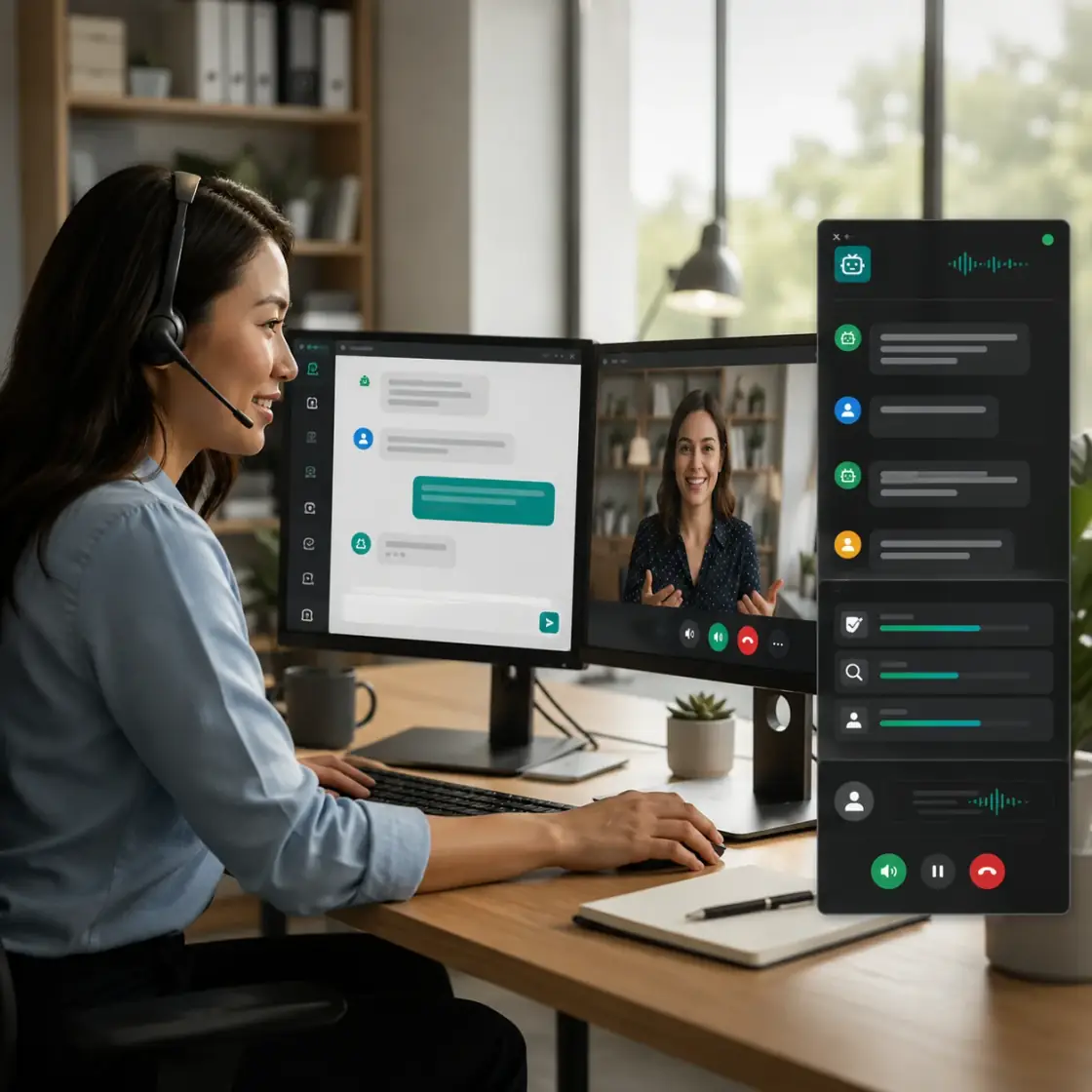
Try it before you decide

Talk to a live MediaSFU agent, right here.

Four faces on one agent: a character, a phone call, a messenger and a camera concierge. It greets you, answers in real time, and you can interrupt it. About $0.002 a minute to run your own.

Compare the actual product layer

Decision areaMediaSFUPipecat
What you are adoptingA communication product and infrastructure surface spanning rooms, phone, agents, widgets, translation, and recordingAn open-source Python framework for composing real-time multimodal AI pipelines, with optional managed deployment
Primary abstractionOperational workflows plus APIs, SDKs, and guided studiosPipeline processors, AI services, transports, and frames
Transport postureMediaSFU room, WebRTC, SIP/PSTN, and widget workflows under one accountModular transports including Daily, SmallWebRTC, WebSockets, LiveKit, and specialized providers
Non-developer operationDashboard, cloud phone, campaigns, widgets, and agent studios are part of the product surfacePrimarily code and deployment oriented; teams normally build or connect their own operator experience
After-session artifactsRecordings, raw tracks, AI Notes, transcripts, summaries, and downloadable assetsDetermined by the processors, services, storage, and application behavior your team assembles
Best fitTeams that need the whole communication workflow to launch and operate togetherPython teams that want framework-level control over a custom conversational AI pipeline
From comparison to working product

See the broader MediaSFU story in context.

A rate or feature row cannot show how the pieces work together. These product-shaped experiences make the room, media, operator, audience, and integration surfaces tangible.

Browse all live experiences

Total operating cost

Price the assembled system, not the framework name.

Pipecat can be self-hosted or deployed with Pipecat Cloud. A useful comparison must include compute, warm capacity, AI providers, transport, telephony, and the operator surface around the agent.

Agent compute

Pipecat: Pipecat Cloud costs depend on active session runtime, warm-instance time, and the selected compute profile.

MediaSFU: Model MediaSFU agent infrastructure and communication usage against the workflow you will operate.

AI providers

Pipecat: STT, LLM, TTS, realtime model, and specialist service costs remain part of the assembled pipeline.

MediaSFU: Bring provider credentials and keep model spend visible beside MediaSFU infrastructure.

Transport and telephony

Pipecat: Daily, telephony, or another selected transport can introduce a separate account and billing scope.

MediaSFU: Rooms, SIP/PSTN, widgets, and agent workflows can share the MediaSFU operating surface.

Product operations

Pipecat: Budget for the dashboard, campaign, artifact, handoff, and observability surfaces your team still needs.

MediaSFU: Evaluate which operating surfaces are already available before pricing custom application work.

When each is usually a fit

Choose MediaSFU when

  • Agents must work alongside meetings, SIP/PSTN, widgets, translation, and recordings.
  • Operators need guided configuration, campaign, phone, and artifact surfaces.
  • You want to start with a usable product and extend it with APIs or SDKs.

Choose Pipecat when

  • Your center of gravity is a custom Python conversational pipeline.
  • Transport and provider modularity matter more than a unified product surface.
  • Your team is prepared to build or integrate the surrounding operational workflow.

Five-pass evaluation plan

1

Map the pipeline

List every STT, LLM, TTS, realtime model, transport, telephony, storage, and observability dependency.

2

Map the operator journey

Decide who launches agents, monitors sessions, handles handoff, reviews artifacts, and changes configuration.

3

Model concurrency

Include active sessions, warm capacity, compute profile, media transport, and provider usage rather than one headline rate.

4

Prove the edge cases

Test interruption, tool calls, transfer, long calls, recordings, multilingual behavior, and degraded provider responses.

5

Compare build ownership

Separate framework flexibility from the engineering and operational surface your team must own long term.

FAQ

Is MediaSFU a drop-in replacement for Pipecat?

Not exactly. Pipecat is a framework for constructing AI pipelines; MediaSFU is a broader communication platform with deployable product surfaces, APIs, SDKs, telephony, rooms, widgets, and artifacts. Compare the operating model, not only the pipeline code.

When is Pipecat the stronger choice?

Pipecat is compelling when a Python team wants low-level pipeline composition, modular transports and providers, and is comfortable owning the surrounding product and operational experience.

When is MediaSFU the stronger choice?

MediaSFU is compelling when agents must work with phone, meetings, widgets, translation, recordings, human workflows, and non-developer operators in one product surface.

Why is there no simple Pipecat per-minute calculator here?

A single rate would hide the actual scope. Pipecat can be self-hosted or deployed on Pipecat Cloud, while transport, AI providers, warm capacity, and product operations can all be billed separately.

Last updated: August 25, 2026