Tour Running

Before You Continue

Quick Path For User Guide Visitors

This page is focused on dashboard usage and practical walkthroughs. For lower-configuration or developer-first paths, jump directly with the links below.

Widgets (Low Config) Telephony / SIP SDK + AI Agents

Dashboard Overview

Your home base for meetings, calls, and more

Welcome to Your Dashboard

The MediaSFU Dashboard is your central hub for managing video meetings, phone calls, recordings, and account settings. It's designed for non-technical users who want to get started quickly without any coding.

What You'll Find Here

  • Quick Stats — See your recent meetings, call logs, and recording count at a glance
  • One-Click Meetings — Start or join a meeting instantly
  • VoIP Calls — Make and receive phone calls through your browser
  • Recordings — Browse, search, and playback your meeting recordings
  • Subscription & Balance — Manage your plan and top up minutes
Tip: If you're a developer, you can switch to the full Developer Dashboard using the toggle at the bottom of the sidebar. The Developer Dashboard gives you access to API keys, room configurations, domain settings, and more.
Basic Concepts

Overview

What is MediaSFU?

Welcome to MediaSFU

MediaSFU is a cloud platform for real-time video, audio, and messaging. You can host video conferences, webinars, broadcasts, and chat sessions — either through our prebuilt UI or by integrating our SDKs into your own app.

🏢 Rooms

Four room types — Conference, Webinar, Broadcast, and Chat — each built for different use cases. Rooms can be created via the dashboard or API.

👥 Roles

Host, Co-Host, Participant, and Observer roles with granular permissions for audio, video, screen sharing, and chat.

🎥 Recording

Cloud recording with pause/resume, multiple output formats (portrait/landscape), and HLS conversion for on-demand playback.

🌐 Translation & Voice

Real-time voice translation across 50+ languages. Speakers and listeners each choose their language independently — delivered as spoken audio, not subtitles. Voice cloning lets AI agents and translations speak in the original speaker's voice.

Before You Continue

This section is written as a non-technical guide for dashboard users. If you want the simplest path, use the Lite Dashboard and follow each tab step-by-step. If you are building a custom app with code, use the Developer Documentation or the Quick Start Tutorial instead.
Rooms Documentation

Rooms Overview

MediaSFU provides four room types for real-time collaboration and streaming. Each is optimized for a specific use case — from small team calls to large-scale broadcasts.

Room Types at a Glance

Conference

Multi-participant meetings with video, audio, chat, and screen sharing

Webinar

Presenter-focused rooms with a main stage for the host

Broadcast

One producer streams to many viewers with full recording support

Chat

Lightweight rooms for direct messaging between participants

How Rooms Are Created

Dashboard: Create tracked, logged rooms with full control over type, duration, capacity, and permissions. All records are accessible in your dashboard.

Public Demo: Anyone can start an untracked demo meeting at meeting.mediasfu.com — no account required. These meetings are free and unbilled.

Balance & Billing Documentation

Comprehensive guide to managing your MediaSFU account balance and billing

Account Balance

View and manage your account balance

Pay-as-you-go Model

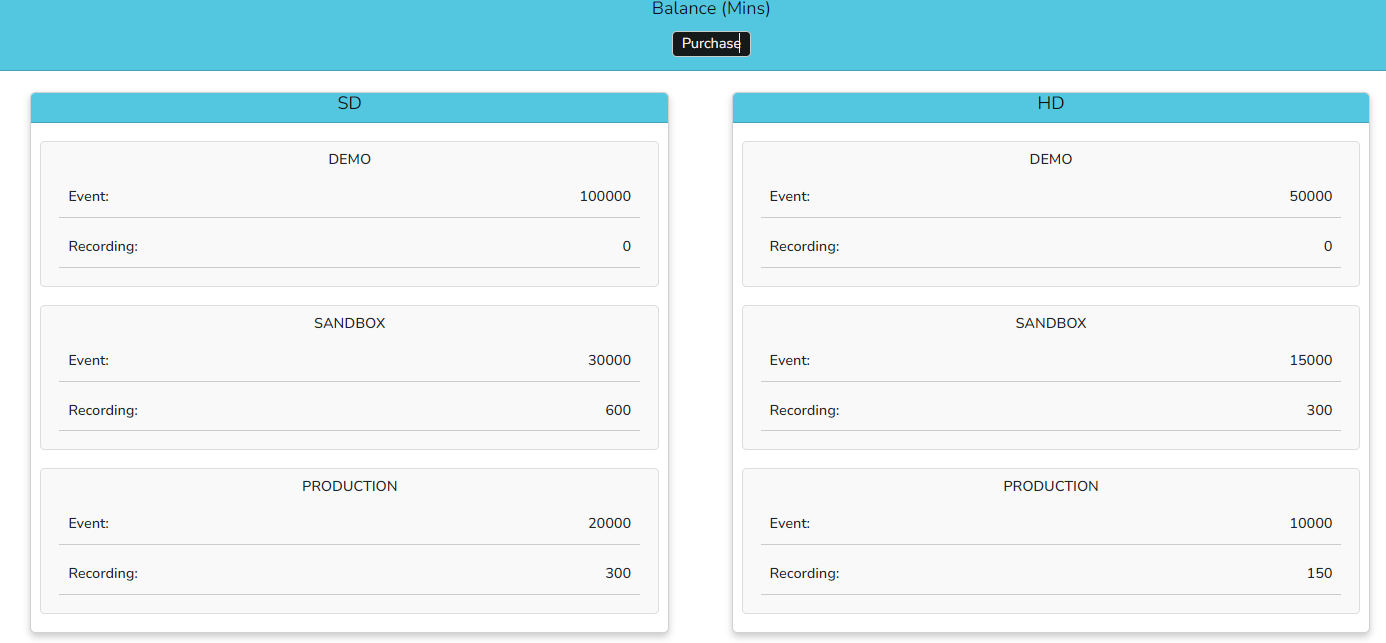
Your MediaSFU account operates on a flexible pay-as-you-go basis, with usage billed directly from your account balance. Minutes are priced based on video quality, with Standard Definition (SD) serving as the base rate for calculations.

Each environment (Demo, Sandbox, Production) maintains separate balance tracking, allowing you to manage costs independently across different stages of your development and deployment lifecycle.

Balance Structure

Demo Balance

Limited balance for testing and exploration of platform features

  • Free tier with basic functionality
  • Ideal for proof-of-concept testing
  • No production features
  • Reset periodically
Sandbox Balance

Development environment balance for testing integrations

  • Full feature access for development
  • Safe testing environment
  • Separate from production costs
  • Development-friendly pricing
Production Balance

Live environment balance for real-world usage

  • Full production feature access
  • Real-time billing and usage
  • High-availability infrastructure
  • Priority support included

Billing Features

Separate balances for Demo, Sandbox, and Production environments
Independent tracking for recordings and live events
15-second precision billing for accurate cost tracking
Per-participant billing based on active usage

Pricing Structure

Video QualityRate MultiplierUse CaseBandwidth
Standard Definition (SD)1x (Base Rate)Basic video calls~500 kbps
High Definition (HD)2x Base RateProfessional meetings~1.5 Mbps
Full HD (FHD)3x Base RateHigh-quality streaming~3 Mbps
4K Ultra HD5x Base RatePremium experiences~8 Mbps
Balance Information Dashboard showing current balance and usage statistics

Account balance dashboard with real-time usage tracking

Balance Management Benefits

  • Transparent Pricing: Clear, usage-based billing with no hidden fees
  • Environment Isolation: Separate cost tracking for different environments
  • Real-time Monitoring: Live balance updates and usage alerts
  • Flexible Scaling: Pay only for what you use, scale as needed

Subscription Documentation

Consumer plans for direct use, developer plans for building with our APIs.

MediaSFU offers two subscription tracks: Consumer plans for individuals and teams who use the platform directly (via the Lite Dashboard), and Developer plans for those building custom applications with MediaSFU APIs and SDKs. You can explore most features in the Sandbox environment without subscribing.

Upgrade, downgrade, or renew at any time from your dashboard. Upgrades take effect immediately; downgrades and renewals can be initiated up to one month before expiry.

Domains Documentation

Learn about managing and utilizing domains on MediaSFU, including registration, verification, and control functions.

Domains Overview

Managing domains on MediaSFU is a crucial aspect of controlling API access and facilitating institution logins. Each user can register a specific number of domains based on their subscription allowances. Once a domain is registered, API requests will only be accepted from this registered domain for production API access.

It is essential to register a domain to be able to use production API access. Requests from unregistered domains or localhost will only be allowed for development and sandbox API access.

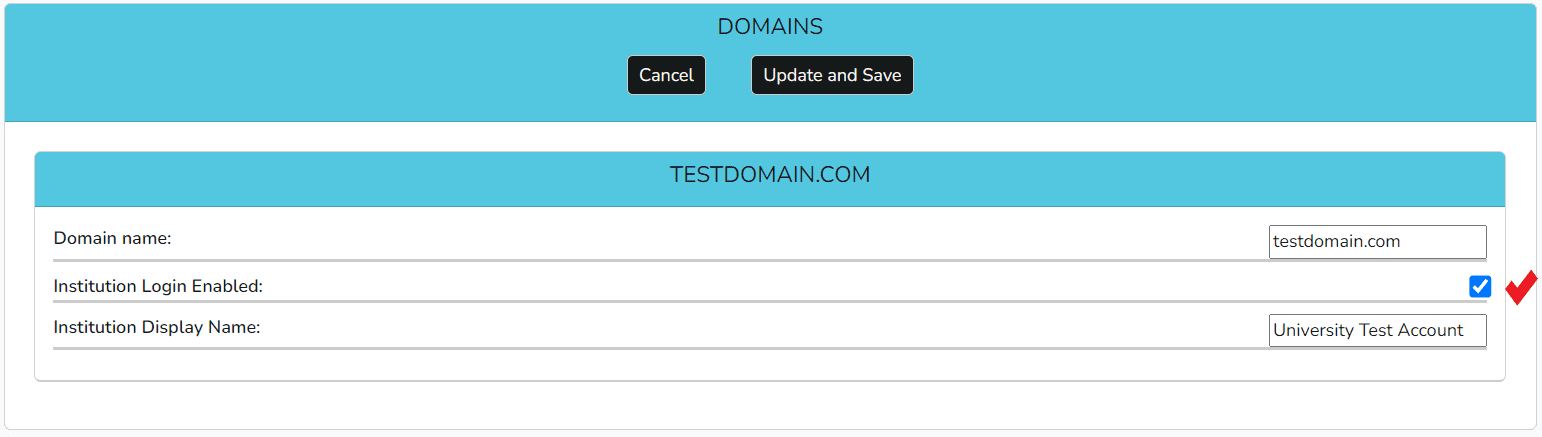
Additionally, the domain registration process allows users to enable or disable institution logins for the registered domain. Enabling institution login means that anyone with an email credential@thedomainname can log in or register, provided they authenticate successfully. These users become sub-users under the organization (user) that registered the domain.

You can easily register a domain by navigating to the domains section and create a new one as shown below for example.

🔐 Production API Access

Register domains to enable production API requests from your registered domains only

🏢 Institution Logins

Enable organization-wide login for users with matching email domains

👥 Sub-User Management

Automatically create sub-users from institution logins under your organization

🛡️ Access Control

Control API access based on domain registration and verification

Domain Registration Interface

Domain registration interface showing the setup process

Key Domain Benefits

  • API Security: Production API access limited to registered domains
  • Organization Control: Manage institution-wide access through domain matching
  • Development Flexibility: Localhost and unregistered domains work for development
  • User Management: Automatic sub-user creation for organization members

Activity Documentation

Comprehensive platform monitoring and activity tracking for MediaSFU

Overview

Understanding MediaSFU Activity Tracking

Platform Activity Monitoring

The Activity feature on MediaSFU provides users with a comprehensive overview of platform usage. It allows users to monitor and track various activities and actions taken by both themselves and their sub-users during sessions.

This administrative control feature gives users visibility into the actions performed on the platform, helping maintain the security and integrity of their sessions.

Comprehensive activity monitoring for all users
Real-time tracking and logging of platform actions
Enhanced security through activity visibility
Administrative control over sub-user activities

Key Benefits

  • Session Security: Monitor all activities to ensure session integrity
  • Administrative Control: Track both personal and sub-user actions
  • Real-time Insights: Get immediate visibility into platform usage
  • Compliance Support: Maintain audit trails for regulatory requirements

Overview

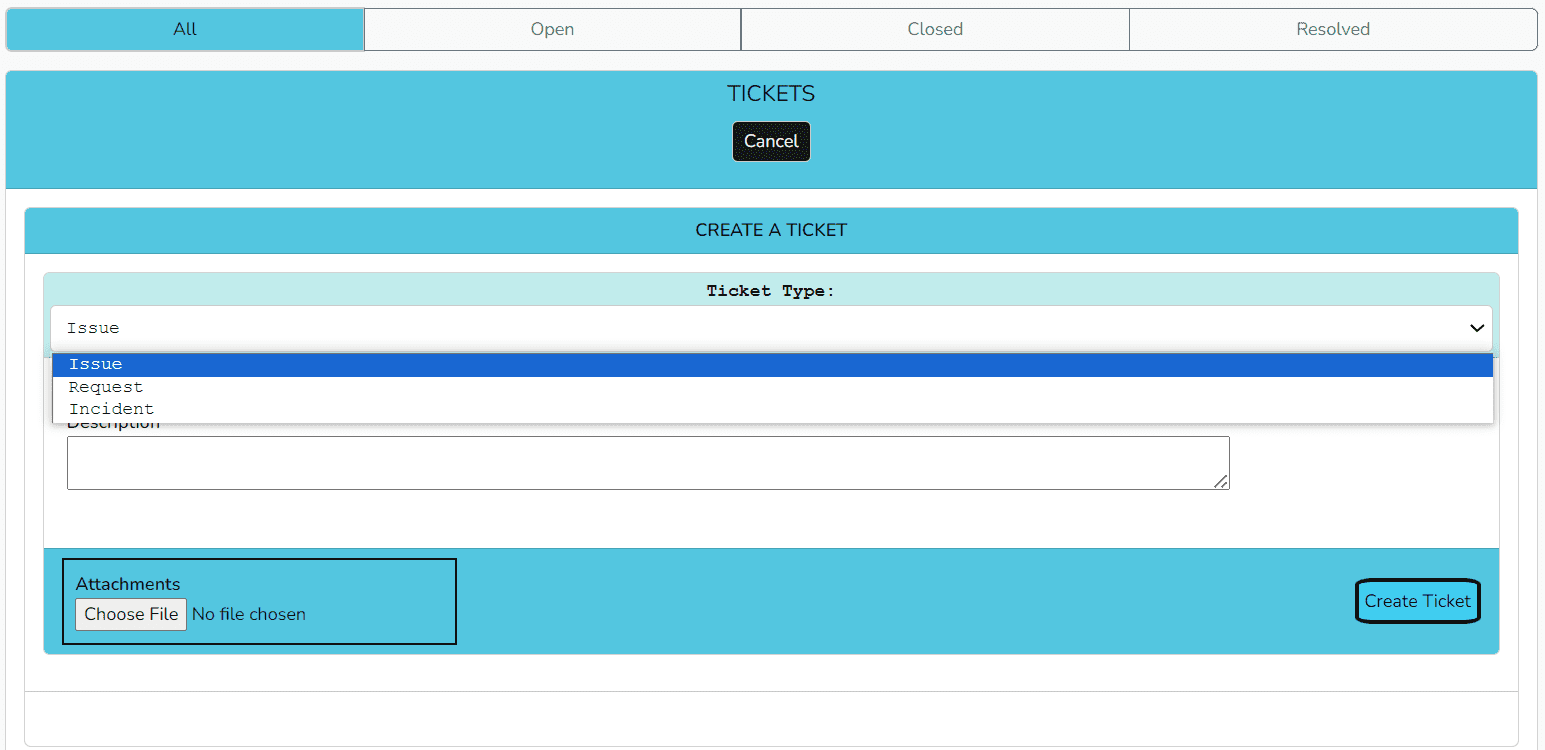
MediaSFU’s ticket system lets you raise and track issues faster than a general support e-mail. Create tickets from your dashboard and follow their progress in real-time.

Dedicated Support

Priority handling via ticket vs. email.

Status Tracking

Real-time visibility into ticket progress.

Attachments

Add screenshots or PDFs (max 1 MB).

Event Settings Documentation

Learn how to customize and manage settings for your events on MediaSFU

Custom Settings for Meetings

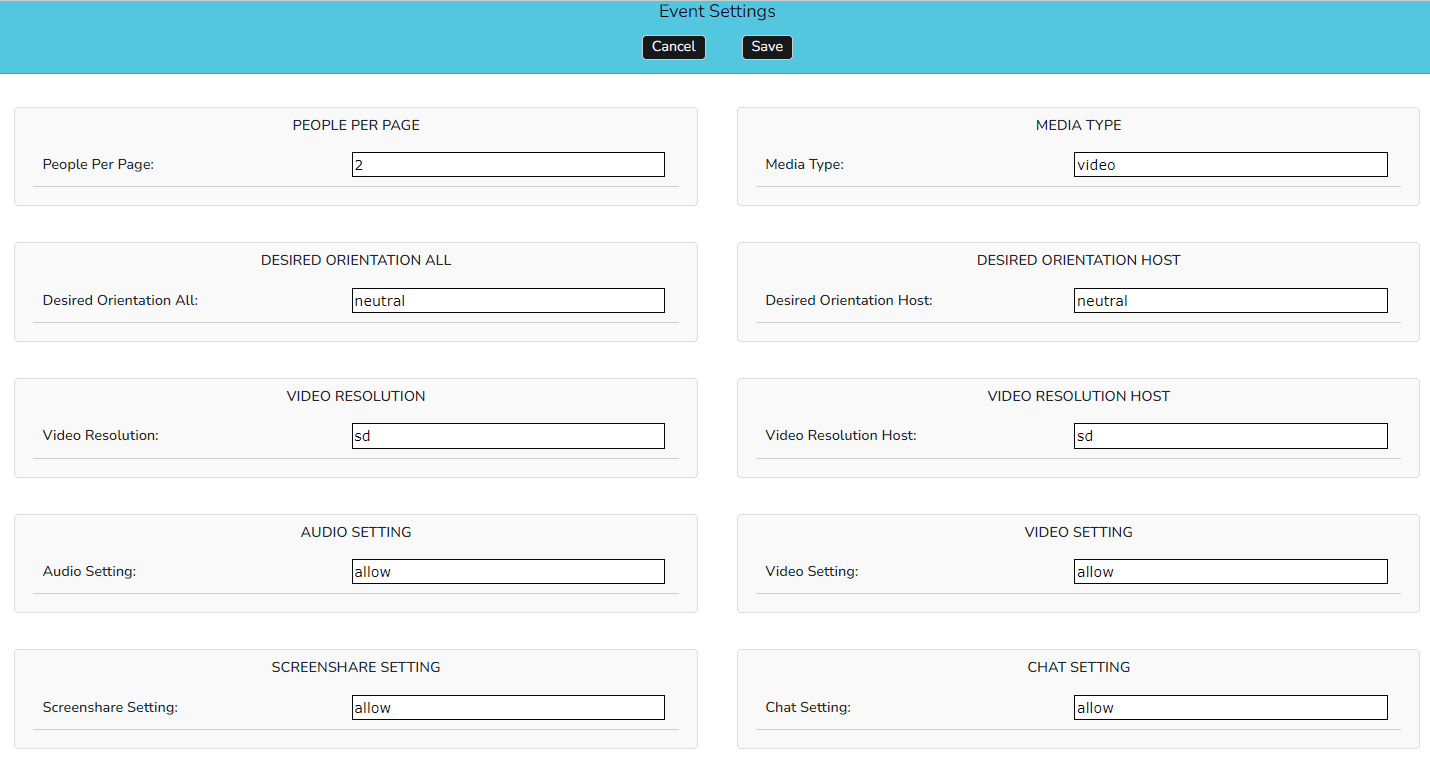
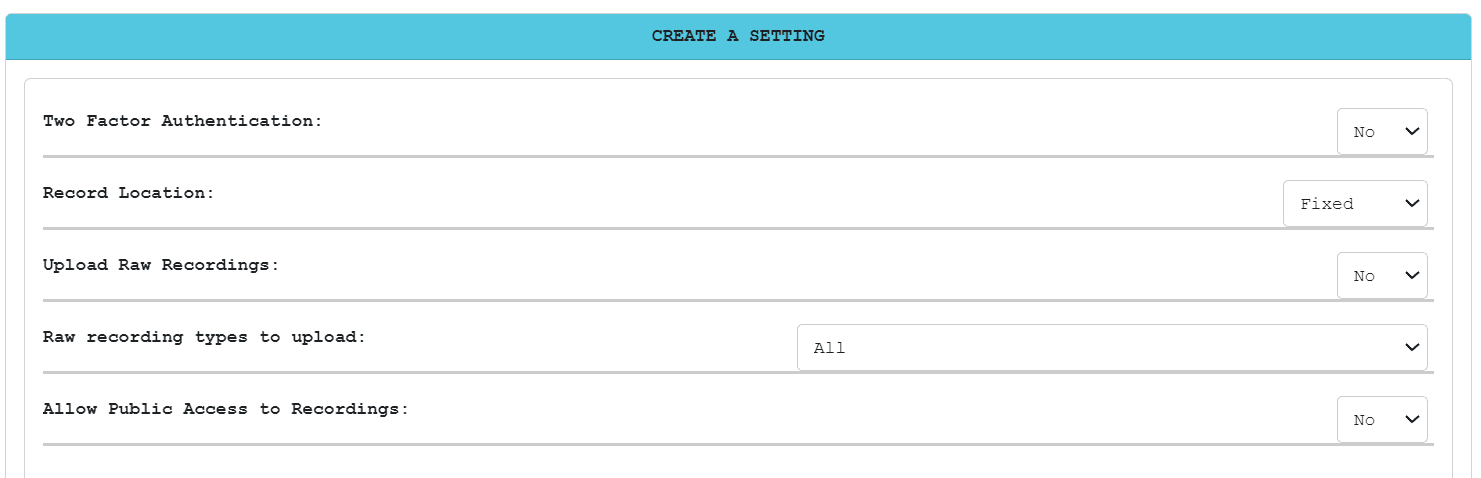
MediaSFU provides users with the flexibility to customize settings for their meetings, allowing for a more personalized experience. Instead of setting these preferences individually for each event during creation, users can establish default settings from their dashboard.

Users can define parameters such as the number of participants per page, preferred video orientation, and other relevant settings. This streamlines the event creation process, ensuring that each meeting aligns with the user's preferred configuration. The following parameters can be customized as shown below (for an explanation of each parameter, see the 'Creating a Room' aspect of the 'Rooms' documentation):

Safe Rooms Feature

You can turn on/off safe rooms (only runs in production rooms), hosts have granular controls to ensure a secure and comfortable environment for all participants. Here's an overview of the available actions and their implications:

Warn: Alerts the host about potential safety concerns. Hosts should pay attention to warnings and take appropriate action to maintain a safe environment.
Kick: Removes the participant from the event room. The kicked participant can rejoin the event room if they choose to do so.
Ban: Permanently removes the participant from the event room and prevents them from rejoining. Use this action for serious violations or persistent disruptive behavior.
Note: If applying this to sub-users and you would not like them to have the ability to disable, you can set auto start safe rooms to true.
Event Settings Configuration

Event Settings Configuration Interface

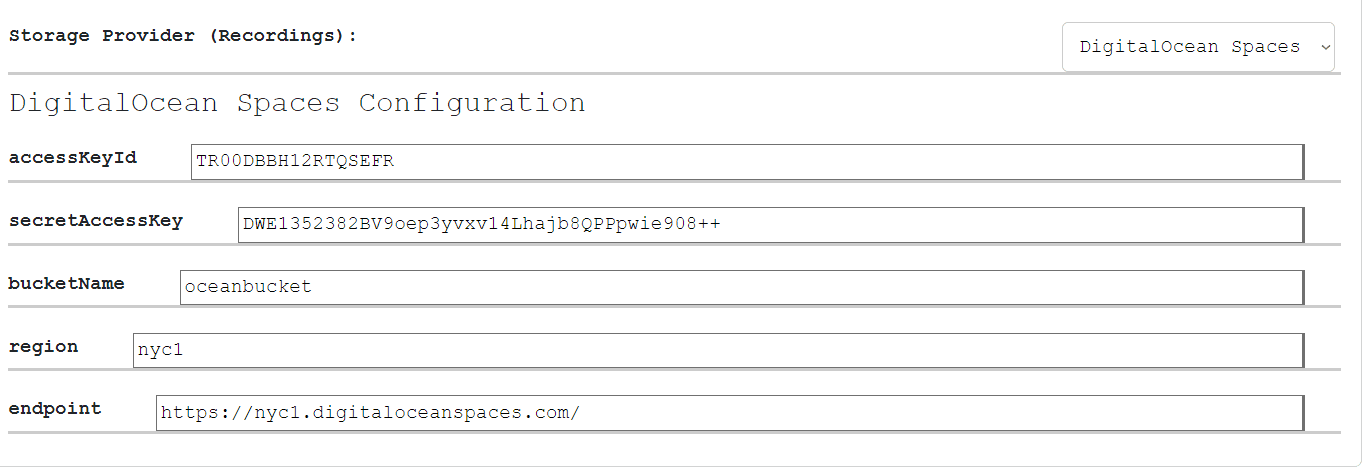
Recording Settings Documentation

Explore controls and settings related to recordings on MediaSFU. Customize recording parameters, manage sub-user settings, and understand the nuances of parent-child roles.

Recording Parameters

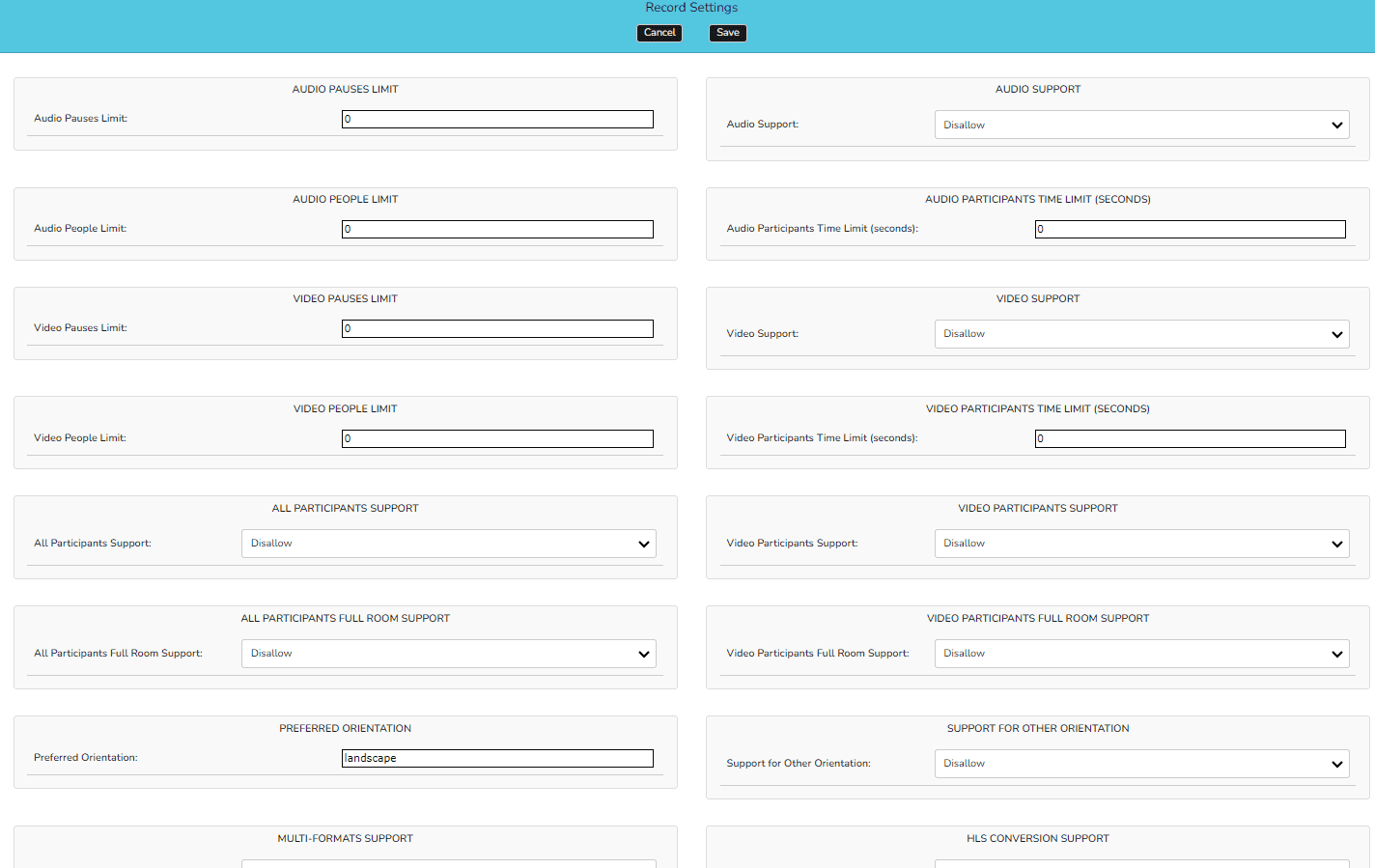
MediaSFU provides users with comprehensive control over recording parameters, enabling a tailored approach to capturing sessions. Instead of adjusting these settings for each recording individually, users can define default parameters from their dashboard.

Users can customize aspects such as audio and video recording preferences, ensuring that each recording aligns with specific requirements. This centralized approach streamlines the recording process and guarantees a consistent configuration across all recorded sessions.

Watermarks Configuration

You can configure the watermark settings, including uploading a PNG file of size 80x80 pixels. Additionally, you can specify the placement of the watermark, choosing from options such as top-left, top-right, bottom-left, or bottom-right.

Recording Settings Configuration Interface

The Recording Settings panel in the user dashboard.

Parameter Explanations

For a detailed explanation of each recording parameter, please see the 'Creating a Room' section in the 'Rooms' documentation.

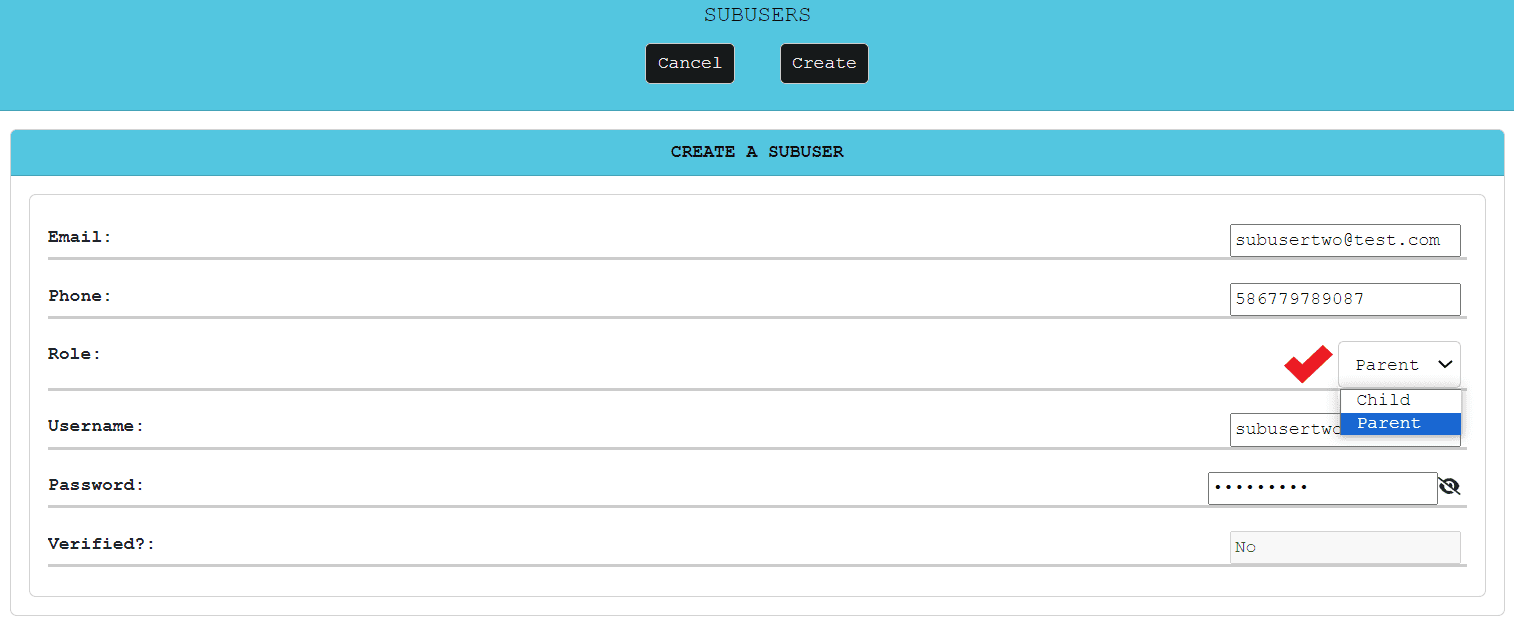
Sub-User Settings

Parent-Child Roles

Recordings Documentation

Comprehensive guide to MediaSFU recording features and configurations

Recordings Overview

MediaSFU offers a comprehensive recording feature that allows you to capture your virtual events and meetings. Whether you want to record a webinar, conference, or broadcast, MediaSFU provides the flexibility to tailor your recording settings based on your preferences.

Key Recording Features

Cloud-Based Recording

All recordings are stored in the cloud for easy access and sharing.

Pause & Resume

Pause and resume recordings multiple times during a session.

Multiple Formats

Get both desktop-friendly and mobile-friendly (HLS) formats.

Watermarks

Customize your recordings further by adding watermarks to your content. In your user dashboard, you can configure the watermark settings, including uploading a PNG file of size 80x80 pixels and specifying its placement.

Note: Recording options are not available in Chat Rooms.

API Keys Documentation

Comprehensive guide to managing and securing your MediaSFU API keys

API Key Overview

Understanding MediaSFU API Keys

Comprehensive API Key System

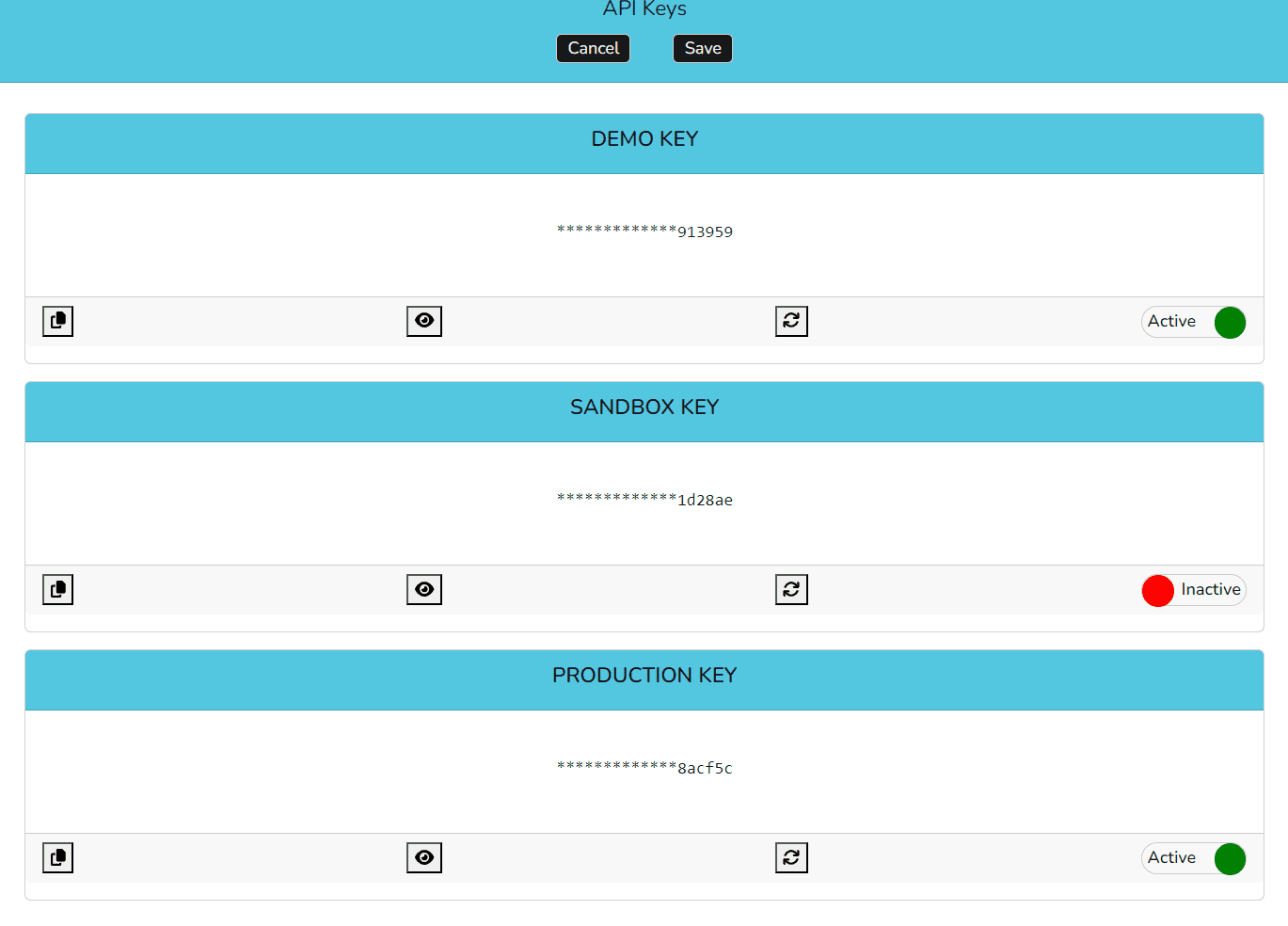
MediaSFU provides users with three distinct API keys, each designated for specific environments: Demo, Sandbox, and Production. Proper usage of these keys is crucial for making API calls to the platform's endpoints. Each endpoint expects an API key corresponding to the environment it serves.

For non-developers, there's no need to worry about managing API keys manually. The platform automatically handles the creation and usage of API keys during the event creation process. This ensures a smooth experience for users who may not be familiar with the technical details of API key management.

Three environment-specific API keys for different use cases
Automatic key management for non-developers
Secure authentication for all API endpoints
Dashboard-based key monitoring and management
API Key Management Dashboard showing the three types of keys available

API Key Management Dashboard Interface

Key Benefits

  • Environment Separation: Separate keys for development, testing, and production
  • Automatic Management: No manual setup required for basic usage
  • Flexible Control: Enable/disable keys as needed from the dashboard
  • Security Focus: Environment-specific access controls and monitoring
Overview
Introduction to AI Credentials
Parameters
API parameters and requirements
Create Credentials
Add new AI credentials
Update Credentials
Modify existing credentials
List Credentials
Retrieve all credentials
Delete Credentials
Remove credentials
Try It Live
Interactive sandbox

AI Credentials Management

Guide to managing AI credentials in MediaSFU

AI Credentials Overview

AI Credentials in MediaSFU allow you to securely store and manage authentication information for AI services like LLM, TTS, and STT providers.

Key Features:
  • Secure Storage: API keys and tokens are stored securely
  • Service Integration: Compatible with OpenAI, Deepgram, and other providers
  • User Scoping: Can be assigned to specific sub-users
  • Pipeline Reference: Use nickName to reference credentials in pipelines

Management Capabilities

Create, update, delete, and list AI credentials through our REST API endpoints with support for VISION and VOICE services.

AI Credentials Sandbox

AI Credentials

Configure and manage your AI service credentials

Secure Fast Multi-Provider
Payload validated. POST code snippets generated!
1
Action
2
Category
3
Provider
4
Credentials
5
Config
6
Review

What would you like to do?

Select the action you want to perform on AI credentials

Create Credential

Add a new AI credential to your account

Update Credential

Modify an existing AI credential

Get Credentials

Retrieve your AI credentials list

Delete Credential

Remove an AI credential from your account

Payload validated. POST code snippets generated!
SIP Configuration Overview
Understanding SIP configurations and their role in MediaSFU
Configuration Requirements
Essential parameters and data needed for SIP setup
Creating SIP Configurations
Step-by-step guide to creating new SIP configurations
Updating Configurations
How to modify existing SIP configurations
Listing Configurations
Retrieving and managing your SIP configurations
Deleting Configurations
Safely removing unwanted SIP configurations
Number Verification
Verifying contact numbers for active routing
API Sandbox
Interactive testing environment for SIP configuration APIs

SIP Configuration Management

Guide to managing SIP configurations in MediaSFU

SIP Configuration Overview

SIP (Session Initiation Protocol) Configurations are essential for connecting your MediaSFU platform to the wider telephony world. They allow you to manage your VoIP trunks, link them to specific contact numbers (DIDs), and define how incoming and new calls are handled.

With SIP Configurations, you can:

  • Connect to various SIP providers/carriers.
  • Route incoming calls based on the DID.
  • Enable and manage outbound calling capabilities.
  • Integrate automated responses using IVR, Playback, or sophisticated AI Agents.
  • Define security parameters like IP whitelisting/blacklisting and geo-restrictions.
  • Customize call recording, audio prompts, and callback options.

Each configuration is tied to a primary `contactNumber` and can be associated with a main user or a specific subuser account. Contact numbers require verification before they can be used for active call routing.

Widget System Overview

Understanding how MediaSFU widgets work end-to-end

Widget System Overview

MediaSFU widgets are embeddable components that add real-time communication features to any website. No coding required for basic integration.

The Complete Flow

1. Create Widget

Configure in Dashboard → Widgets

2. Backend Stores

Widget key + config securely saved

3. Get Embed Code

Platform-specific code generated

4. Add to Site

Copy-paste to your website

5. Widget Auth

Domain validated, token issued

6. Live!

Widget functional on your site

For Non-Developers

Copy-paste embed codes, visual configuration, no coding required.

For Developers

npm packages for React/Vue, full API access, event callbacks.

For Enterprise

Custom UI, webhooks, SSO integration, white-label options.

Overview

Real-time translation for meetings

Real-Time Translation Overview

MediaSFU's real-time translation enables participants in meetings to speak in their native language while others hear the translation in their preferred language.

Speech Recognition

Automatic speech-to-text converts spoken words into text in real-time.

AI Translation

Advanced LLMs translate text while preserving context and meaning.

Voice Synthesis

Natural-sounding text-to-speech delivers translations as audio.

Per-Participant

Each participant chooses their listening language independently.

How It Works

1
Speaker talks

Audio captured and streamed

2
STT Processing

Speech converted to text

3
LLM Translation

Text translated to target languages

4
TTS Output

Translated audio delivered

Use Cases

  • Global Team Meetings — Team members in different countries participate in their native languages
  • Customer Support — Support agents communicate with customers regardless of language barriers
  • International Webinars — Presenters reach global audiences with real-time translation
  • Multilingual Classrooms — Students learn in their preferred language while instructors teach in theirs
1 / 6

Overview

What are disposable API keys?

Disposable API Keys Overview

Disposable API keys are temporary, scoped credentials that allow third parties to perform specific operations on your account without exposing your main API key.

Time-Limited

Keys expire after a configurable duration (1 day to 1 year, or never).

Permission-Scoped

Restrict to specific operations (create rooms, make calls, etc.).

Domain-Locked

Only works from specified domains for additional security.

Revocable

Instantly revoke access at any time if compromised.

How It Works

1
You create key

Define permissions & domains

2
Share with partner

They integrate the key

3
Partner uses API

Limited to allowed ops

4
Key expires/revoked

Access ends automatically

1 / 6